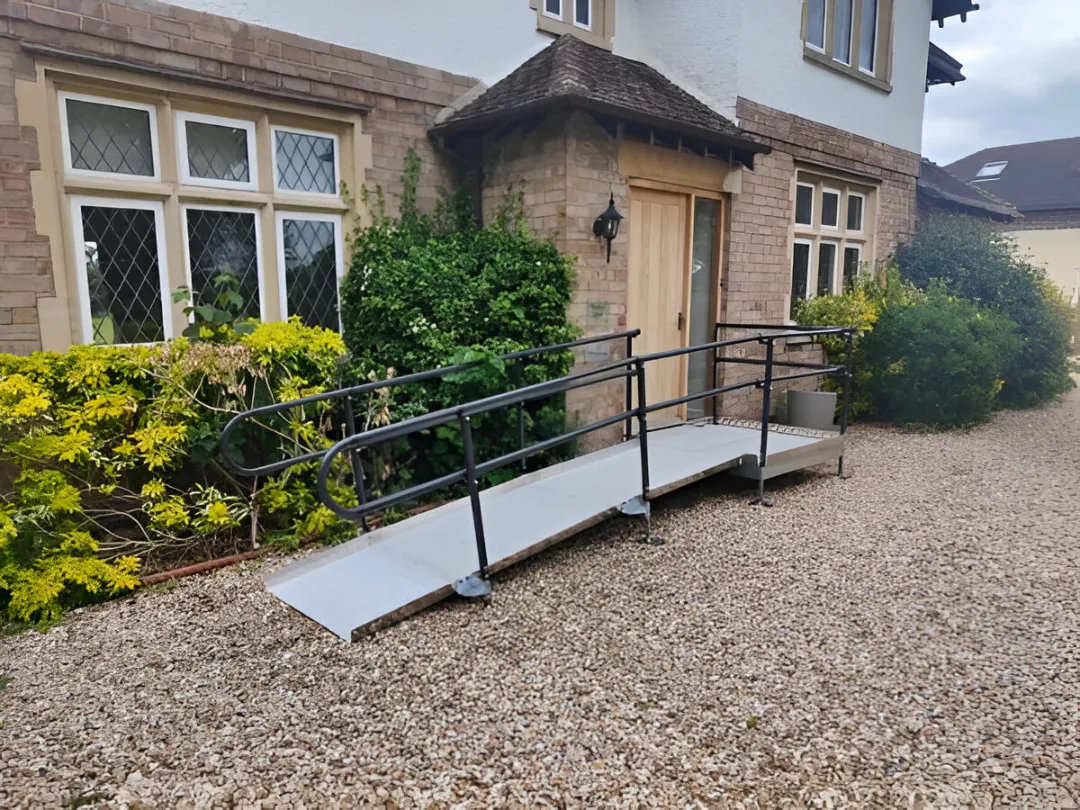
Ramps
What Are Ramps?
A ramp is a gently inclined pathway designed to help people move up or down a height difference safely.
They can be:
-
Permanent (concrete, wood, or metal structures fixed in place)
-
Portable (lightweight, foldable ramps)
-
Modular (adjustable metal systems)
-
Threshold ramps (small ramps for doorways)
-
Suitcase ramps (two folding panels for wheelchairs)
Ramps often include:
-
Non-slip surfaces
-
Handrails
-
Edge protection (to prevent wheels slipping off)
Why Ramps Are Useful for Disabled People
1. Wheelchair Access
For wheelchair users, stairs are a complete barrier. Ramps allow:
-
Independent entry and exit
-
Access to homes, shops, schools, and workplaces
-
Movement without needing to be lifted
2. Mobility Aid Support
People who use:
-
Walkers
-
Crutches
-
Canes
-
Mobility scooters
Find ramps much safer than steps.
3. Reduced Fall Risk
Climbing steps can be dangerous for people with:
-
Balance problems
-
Weak muscles
-
Joint pain
-
Neurological conditions
A properly designed ramp reduces strain and slipping risk.
4. Promotes Independence
Ramps allow disabled individuals to:
-
Leave home independently
-
Access public spaces
-
Participate in everyday activities
Without them, people may rely heavily on others for assistance.