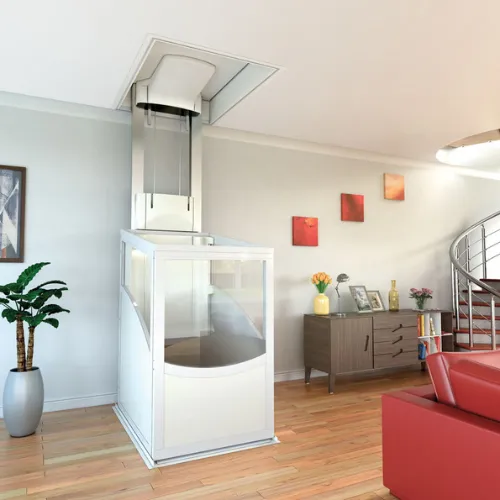
Homelift
What Is a Homelift?
A homelift typically includes:
-
An enclosed cab or platform with a door
-
A vertical shaft or guide rails
-
Electric or hydraulic drive system
-
Safety features like emergency stop, interlocks, and alarms
-
Control buttons on each floor and inside the cab
Homelifts can vary from compact wheelchair-accessible platforms to small traditional cabin elevators for standing users.
How a Homelift Helps a Disabled Person
1. Accessible Multi-Level Movement
For someone who uses a wheelchair or has severe mobility limitations, climbing stairs—even with aids like stairlifts—can be unsafe or impossible. A homelift allows direct, step-free access between all floors.
2. Wheelchair Accessibility
Many homelifts are designed so a wheelchair user can roll directly into the lift and ride between floors without transferring out of their chair, which is a huge advantage in terms of independence and comfort.
3. Improves Safety
Stairs—even with grab rails and other modifications—remain a fall risk. A homelift eliminates that risk entirely by providing a safe vertical pathway.
4. Comfort and Convenience
Unlike stairlifts that require sitting in a chair and being moved along a rail, homelifts:
-
Offer a comfortable, enclosed ride
-
Often have room for standing passengers and loads
-
Can be integrated aesthetically into the home